
10 Modern Glass Partition Designs for Homes and Offices
Bathroom Shower Cubicle
Anusham Designs
August 6, 2026
Sliding vs Hinged Shower Cubicle – Which is Better?
When upgrading your bathroom, efficiency, safety and chic are key. That’s why the best bathroom shower cubicle can even make a regular shower all the more fun. Plus, it will keep the tiles around it dry and safe. When renovating, homeowners often have to choose between two door designs: a hinged swing door or a sliding door.
Each type of enclosure offers benefits based on room size, layout, and other factors. A comparison of a Sliding vs Hinged Shower Cubicle helps you decide which enclosure will be right for your home.
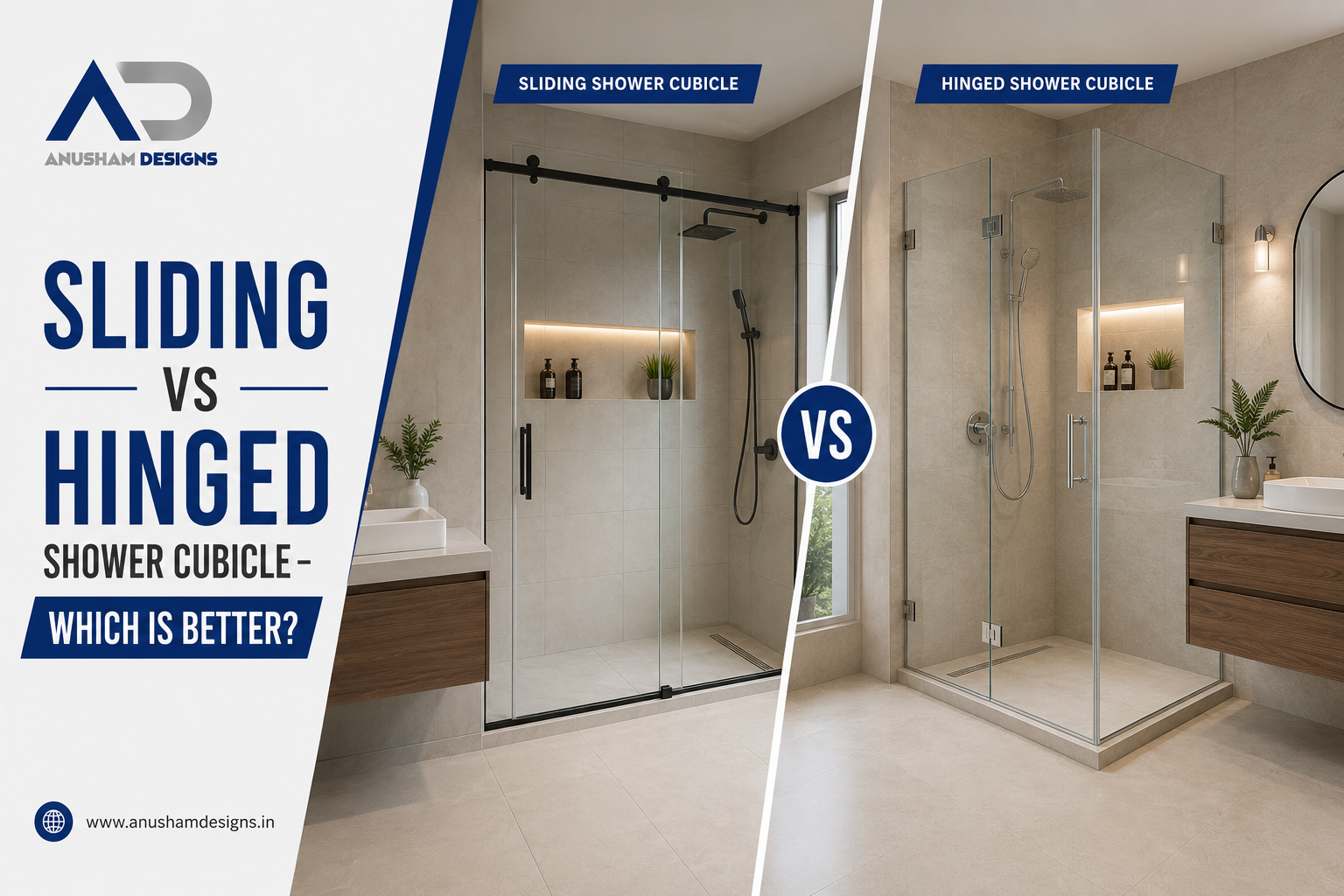
1. Understanding Door Mechanics
The main difference between these enclosures lies in how the door moves during use.
- Sliding Enclosures: Glass panels glide sideways along top and bottom tracks using small roller wheels. The door stays inside the shower frame area.
- Hinged Enclosures: Glass panels attach to wall mounts with metal hinges. The door swings outward into the bathroom like a room door.
- Track Mechanics: Sliding doors rely on metal rails, while hinged doors use heavy pivot hardware attached to wall studs.
2. Space Requirements and Room Layout
When it comes to choosing a bathroom shower cubicle layout, checking the room space is key.
- Tight Spaces: Sliding doors are ideal – they don’t require room outside the door to swing open.
- Large Spaces: Hinged doors are best in large master suites where swinging away will not block access to beds or bathrooms.
- Room corners: Sliding corner entry models make the most of mid-floor space in a square or rectangular bathroom.
3. Comparing Sliding vs Hinged Shower Cubicle Design
Evaluating a Sliding vs Hinged Shower Cubicle helps you match door mechanics with your room setup.
Spatial Efficiency and Door Clearance
Sliding enclosures feature overlapping glass panels mounted inside runner tracks. Because the door glides sideways, you never worry about swing space near towel racks or vanities. This makes sliding models ideal for small apartment bathrooms or guest suites where space is limited.
Visual Style and Structural Framing
Hinged shower doors offer a clean, simple look with minimal metal framing along the glass edges. Heavy glass panels swing smoothly on pivot hinges, creating an open visual feel across the room. Evaluating a Sliding vs Hinged Shower Cubicle reveals that hinged models give your room a frameless spa appearance.
4. Cleaning And Daily Upkeep
A neat bathroom shower cubicle is all about knowing how hardware design affects daily upkeep.
Track Cleaning: Sliding doors have the track at the bottom clogged with soap scum and hard water stains.
Simplified Interface: Hinged doors have a simple flat glass interface with few metal tracks for a quick wipe.
Wheel Maintenance: The wheel on sliding doors may need adjustment or replacement after several years of back-and-forth on the paint.
5. Features For Accessibility And Safety
Shower access is needed for multi-generational households, elderly relatives and people with mobility concerns. Hinged doors swing open to a full 90-degree angle for a roomy walk-in shower. The sliding door opening is limited by a panel door, which creates a tight entryway.
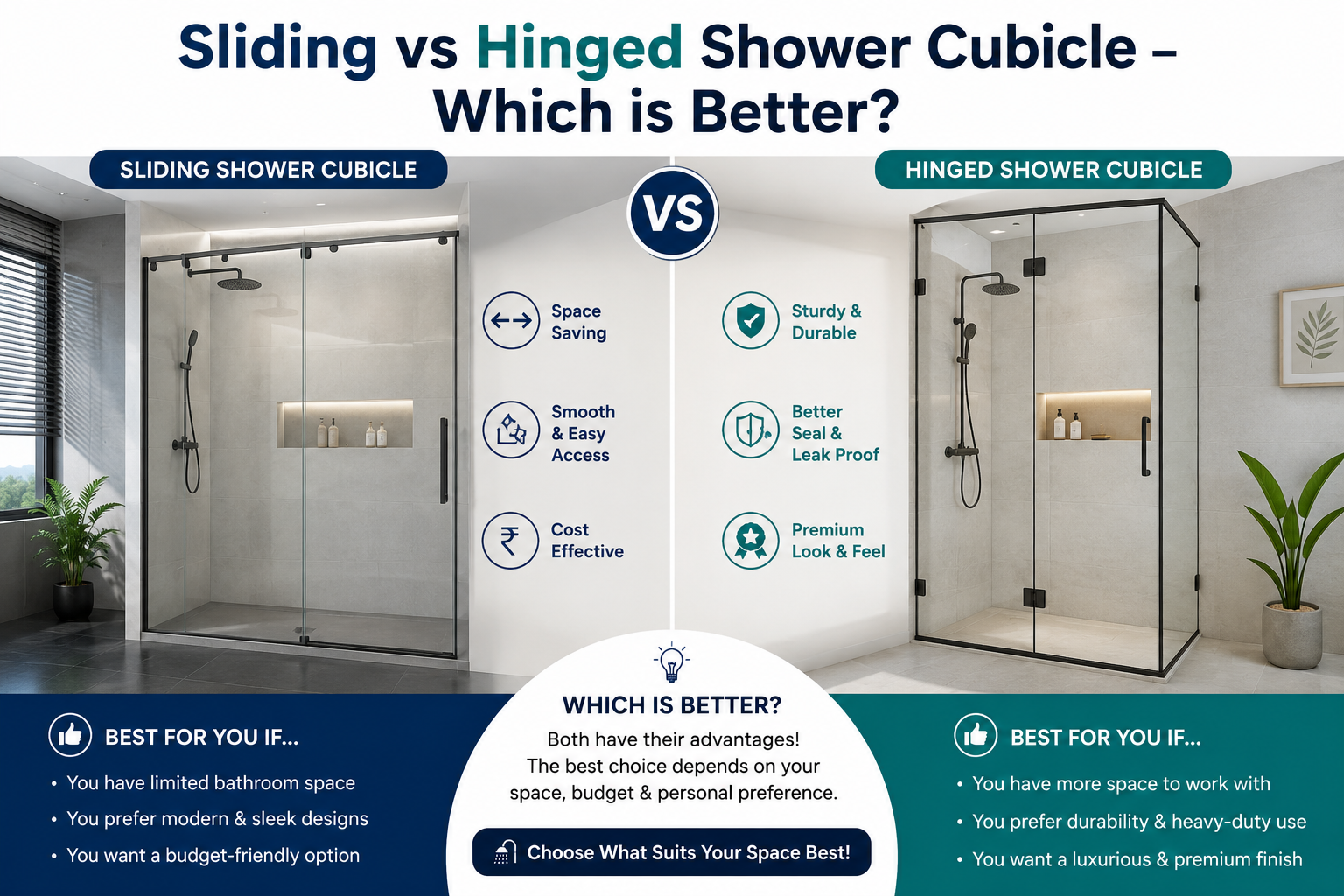
6. Comparative Overview
Feature | Sliding Shower Enclosure | Hinged Shower Enclosure |
Door Movement | Glides sideways on tracks | Swings outward on hinges |
Best Room Size | Compact or small bathrooms | Spacious master bathrooms |
Outward Space Needed | None | Requires full swing radius |
Entry Width | Slightly smaller due to overlap | Full width opening |
Cleaning Focus | Bottom tracks need scrubbing | Flat glass wipes clean fast |
7. Installation and Wall Support
Proper support ensures your bathroom shower cubicle remains safe, stable, and leak-free for years.
Wall Weight Distribution
Hinged doors put heavy pulling weight on wall mounts when swung open. Workers must anchor hinged hardware directly into solid wall studs to prevent glass sagging over time. Sliding doors spread weight evenly along top rails and floor thresholds, making them simpler to install on tiled walls.
Adjusting for Uneven Walls
Bathrooms with slightly crooked walls benefit from sliding door frames, which offer built-in side adjustments. Hinged doors require flat, straight wall surfaces so heavy glass panels swing smoothly without scraping floor tiles.
8. Long-Term Durability
Comparing a Sliding vs Hinged Shower Cubicle comes down to mechanical parts and hardware reliability over time.
Wear on Moving Parts
Sliding enclosures use internal wheels, floor guides, and soft-stop parts. Over years of daily use, hard water buildup can slow down wheel movement. This means wheels may need cleaning or replacing down the road.
Solid Metal Hinge Performance
Hinged models use solid metal hinges with few moving parts. Without bottom tracks to collect dirt or wear down, high-quality hinged hardware offers long life with minimal repairs over the years.
Upgrade Your Bathing Space with Modern Design
Selecting a sliding or hinged door enclosure ultimately depends upon your bathroom dimensions, access requirements, and style preferences. A bathroom shower cubicle that is properly designed augments bathroom usage, ensures floor safety, and enhances home value. Great-quality glass and hardware ensure a long-term configuration that enhances your daily life.
Ready to upgrade your bathroom with custom enclosures made for your space? Contact Anusham Designs today to explore custom glass choices, expert installation, and modern shower styles made for long-term comfort!
 Visit Anusham Designs and bring your vision to life today!
FAQ
General Question
Sliding doors work best for small bathrooms because they move sideways along tracks. They require no outward swing space in your room.
Hinged models are easier to clean because they feature flat glass panels without bottom tracks. Sliding enclosures require track scrubbing to remove soap buildup.
When installed with quality vinyl seals and drip guards, hinged doors do not leak. Water drops on the glass may fall on the floor when opening outward.
Yes, modern sliding systems use top header bars and exposed stainless steel rollers to provide a clean look without heavy side frames.
Once your custom glass panels are cut and treated, fitting takes about 3 to 5 hours on site. Your installer makes sure all hardware is level and sealed.