
10 Modern Glass Partition Designs for Homes and Offices
Glass Railings for Staircase
Anusham Designs
October 25, 2026
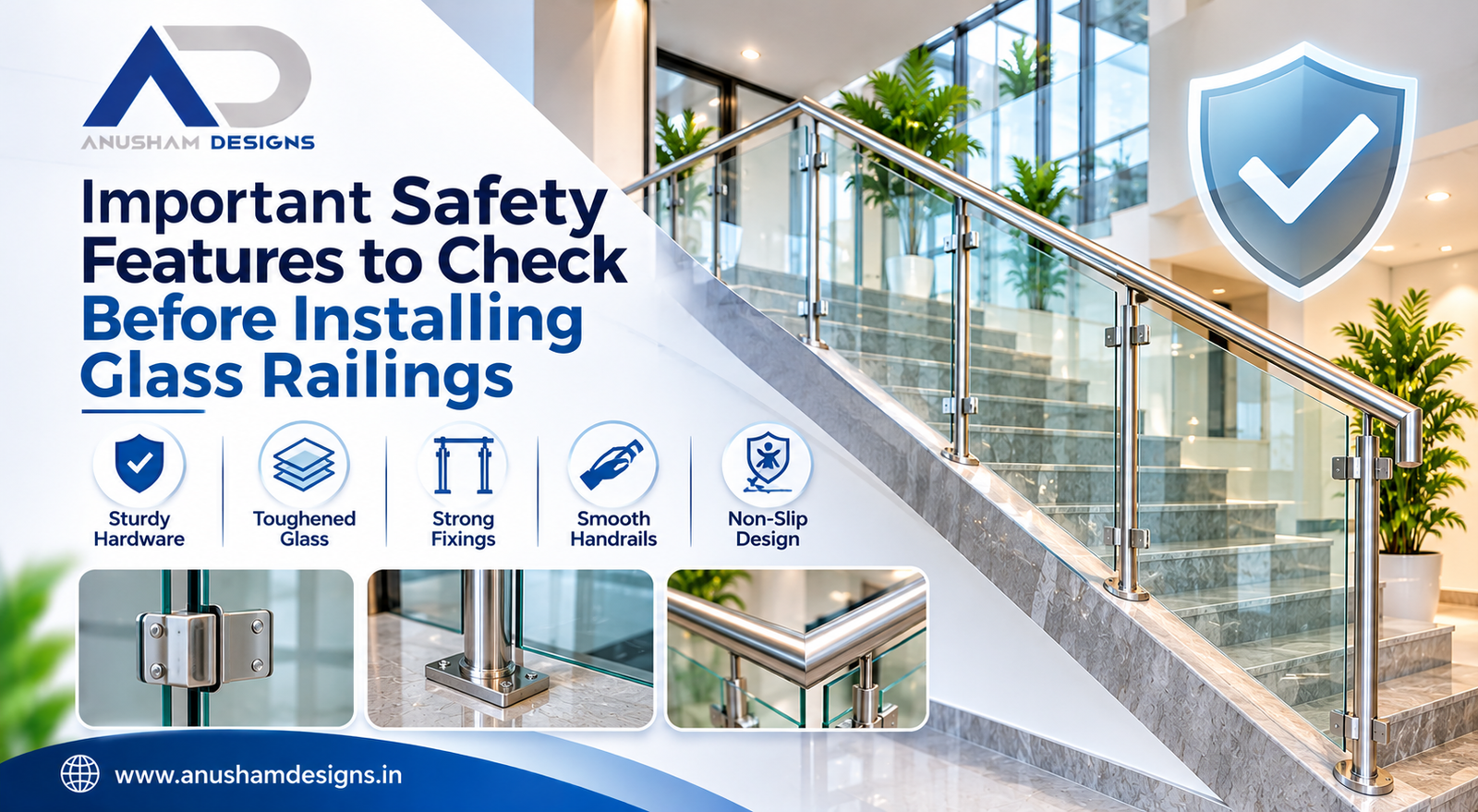
Important Safety Features to Check Before Installing Glass Railings
Glass makes a staircase look open, bright, and modern. But looks alone do not keep people safe. Before you pick glass railings for staircase use in your home, check a few key safety features. This guide covers each one in plain words, so you can buy with confidence.
Why Safety Comes First
Stairs are one of the most common places for falls at home. Kids run on them. Older people lean on them. Guests carry bags and check their phones as they climb. A weak railing turns a small slip into a serious injury.
Glass looks fragile, but the right glass is very strong. The key word is right. Glass types, thickness, and fittings all differ. Check each point below before the work starts.
1. Check the Glass Type
This is the most important check. Ask your supplier which glass they use.
Toughened glass is heated and then cooled fast. This makes it four to five times stronger than normal glass. When it breaks, it forms small, blunt pieces instead of sharp shards.
Laminated glass has two or more glass sheets bonded with a tough plastic layer. If it cracks, the pieces stick to the layer. The panel stays in place.
For most homes, laminated toughened glass is the safest pick. Never accept plain float glass for glass railings for staircase use. It breaks into sharp pieces and puts your family at risk.
2. Check the Glass Thickness
Thickness decides how well glass handles pressure. Thin glass bends or cracks when someone leans on it.
Most home staircases use 12 mm toughened glass. Some designs use 10 mm glass with strong fittings. Others use 16 mm or more for extra strength. Laminated panels are thicker because of their layers.
The right thickness depends on the design and the fitting type. Ask your installer to explain their choice. A good installer gives a clear answer.

3. Check the Railing Height
A low railing lets a person tip over the edge. The standard stair railing height is about 900 mm to 1000 mm, or 36 to 42 inches. Landings and balconies need more.
Check your local building rules before you finalize the plan. If you have small kids, choose a firm railing at the higher end of the range.
4. Check the Fittings and Fixing Method
Strong glass fails if the fittings are weak. The parts that hold the glass matter as much as the glass.
- Metal grade: Stainless steel grade 304 or 316 resists rust. Grade 316 works better in damp or coastal homes.
- Clamps and spigots: They must grip the glass tight with no wobble. Soft gaskets between metal and glass stop pressure points.
- Base channel: The glass sits inside a strong track. This gives support along the whole bottom edge.
- Anchoring: Fix the base into solid concrete or a strong frame. Never fix it into weak or cracked surfaces.
5. Check the Edges and Holes
Glass edges must be smooth and polished. Rough edges cut hands. They also hide tiny cracks that weaken the glass over time. Corners should be round.
Holes in the glass must be drilled clean. They must also sit a safe distance from the edge. Poor drilling is a top cause of cracks.
6. Check the Handrail
Glass alone can work, but a handrail adds grip. Kids and older people use it to steady themselves.
A top handrail also holds the panels in one line. It spreads pressure across all of them. Pick a rail that feels smooth, firm, and easy to hold.
7. Ask About Load Strength and Testing
A railing must handle a hard push or heavy weight. Ask the supplier which safety standard the system meets. Rules differ from place to place.
Ask simple questions. How much force can it take? Has it been tested? Can you see the proof? A trusted company answers without trouble.
8. Check the Gaps
Gaps between panels, and between glass and wall, must be small. Large gaps trap a child’s hand, foot, or head. Keep gaps as small as the design allows. Also check the space near the steps.
9. Make the Glass Easy to See
Clear glass is hard to notice. Kids and pets can walk straight into it. A handrail, frosted strips, or a light tint shows where the glass is.
10. Choose the Right Installer
Good parts still need good fitting. One wrong cut or one loose clamp creates danger. Choose a team that:
- Takes exact measurements at your home
- Has built stair railings before
- Uses the right tools and fixing parts
- Tests the railing after fitting
- Gives a clear warranty
Ask to see past work. At Anusham Designs, safety checks come before looks. Each panel is fitted straight and firm. Good glass railings for staircase projects start with careful planning and neat work.
Advantages of Glass Staircase Railings When Safety Is Done Right
After you cover the safety points, the advantages of glass staircase railings are easy to enjoy:
- Strong and lasting: Toughened glass handles daily use for years.
- More light: Light passes through glass, so stairs and halls look bigger.
- Clear view: You see the whole space and keep an eye on kids.
- Easy to clean: A soft cloth and mild cleaner keep it spotless.
- Modern look: It suits new and old homes and adds value to your property.
Keep Your Railing Safe Over Time
Safety does not end after fitting. Check your railing every few months. Look for loose clamps, rust, and small cracks. Clean the glass with a soft cloth and mild cleaner. Skip harsh chemicals. If you see a chip or crack, call an expert right away.
Final Thoughts
A glass railing has two jobs. It must look good, and it must keep people safe. Check the glass type, thickness, height, fittings, edges, handrail, testing, and gaps. Then pick a skilled installer.
 Visit Anusham Designs and bring your vision to life today!
FAQ
General Question
Yeah. Toughened or laminated glass works. You need the right thickness. Hire pros to install it. Strong metal parts hold everything together.
Laminated toughened glass. Best option for most places. Strong stuff. If it cracks, the plastic layer keeps the pieces from scattering everywhere.
Most homes use 12 mm toughened glass. Some designs use 10 mm or 16 mm. Your design and fitting type decide the right size, so ask your installer.
Yeah, get one. Handrails give you something to grip. Keep the panels aligned. Safer for kids and older folks too.
Wipe down the glass with a soft cloth and mild cleaner. Check your clamps and fittings every couple months. See something loose, rusty, or cracked. Call someone who knows what they're doing.